Q&A with Todd Mensing, Partner at Ahmad, Zavitsanos & Mensing (AZA Law)
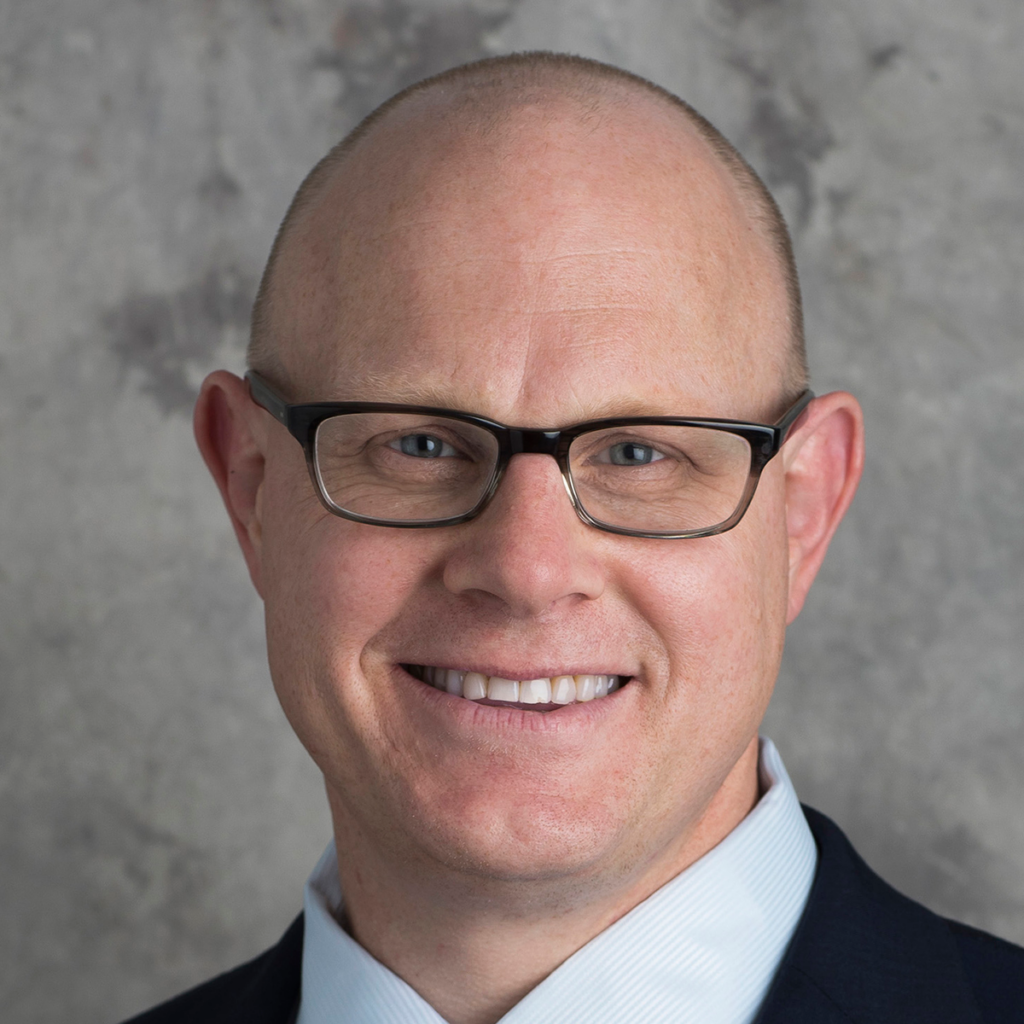
Todd Mensing is a partner at Ahmad, Zavitsanos & Mensing (AZA Law), a Houston-based commercial litigation firm founded in 1993. He has been board certified in Civil Trial Law by the Texas Board of Legal Specialization since 2011, a credential held by fewer than five Texas attorneys per year on average. Mensing was elected to the American Board of Trial Advocates in 2014 and holds an AV Preeminent rating from Martindale-Hubbell. Chambers USA ranks him among the firm’s top litigators, with a practice focused on energy, breach of contract, and high-stakes commercial disputes. He joined AZA in 2001 after beginning his career at Vinson & Elkins. What follows is a conversation about trial strategy, jury communication, and what 25 years of courtroom work has taught him about the practice.
Q: What drew you to a trial-first boutique?
Todd Mensing: I noticed, even in 1999 when I left, a shift away from courtroom advocacy and the art of towards a big-firm model centered on a transactional-focused business model.
I also knew I wanted to be a trial lawyer. In my first year, I was lucky and unlucky at the same time to be given what was then the Eckerd docket. Eckerd, as you may recall, was a drug chain that CVS acquired. My firm at the time had a legacy docket of about 30 Eckerd cases that a new lawyer would take on every four or five years. I inherited that docket in my first year. I was lucky in that as a first year I had 30 of my own cases, ran the cases, and tried the cases.
The reason it was unlucky is that I worked for myself and did not cultivate the right relationships with the power brokers at the firm. I had the highest billable hours at the firm, and that did not matter. At the end of my first year, the firm let Eckert go as a client.
I was then shifted to more typical first-year Big Law projects, such as writing memos and doing document review. I decided that the time was right to absorb the risk of building my own firm. I found John Zavistsanos and Joe Ahamd, thought they were the right partners to build a firm, and made a move.
Q: Was there a moment, a specific case, or a time when you decided you wanted to be a trial lawyer — not just a litigator?
Todd Mensing: I’ve always felt that I was good at thinking on my feet and communicating. Even if I don’t pick up subject matter as quickly as others, I am better at deploying it once I have it. I noticed that in my first year I would outperform more experienced lawyers in a courtroom setting.
It feels awkward to talk yourself up, but the question invites that a little. I just noticed early on that I was a very good communicator in pressure situations, and had an ability to read the room and read people. Those experiences solidified the direction I wanted to take my practice, which was towards courtroom-advocacy.
Q: Board certification in civil trial law is held by a small percentage of Texas attorneys. Beyond the credential itself, how has that process shaped how you think about your own development?
Todd Mensing: Board certification — on average — is now earned by fewer than five lawyers per year statewide. And that’s with the Board continuing to relax the requirements in terms of trial experience. Seeing that pass rate, and how few people still obtain the certification, shows me that trial advocacy is becoming a lost art. Being a strong courtroom advocate requires mastering a universe of law that relates to trial. Few are trying to obtain a certification that they master it.
Studying for that exam also taught me early the importance of self-directed continuing education. I constantly read trial advocacy books and articles and try to keep myself abreast of the latest thinking on trial advocacy. I am also a frequent speaker on that topic.
Q: Energy cases often involve incredibly technical subject matter — geology, engineering, operations. How do you translate that complexity for a jury without oversimplifying it?
Todd Mensing: There’s a tightrope you need to walk between simplifying subject matter and talking down to a jury. People underestimate the collective intelligence of 12 people. Together, a jury makes a very impressive thinking body, so you don’t necessarily need to oversimplify. However, you do need to make it understandable to people who did not live in the world that the is the trial subject matter.
The way to do that is through a combination of tools. Metaphors, analogies, graphics, plain language.
It is also critical to advance your presentation through the format of a story. A trial is not a debate or a tit-for-tat.
Jurors are trying to figure out, “What really happened and why?” Arguing your points in the framework of a story, that accounts for what people understand about human motive and nature, makes your points go down easier. That story must have a moral underpinning, so the jury understands why, despite the technical subject matter, what flows beneath it is a story about who did something right and who did something wrong. Your client did something right. The other did something wrong. A jury wants to do the right thing according to its sense of gut justice. You want to create motivated reasoning in your favor with that moral underpinning.
Q: What do juries consistently get wrong about oil and gas disputes, and how do you get ahead of that?
Todd Mensing: I don’t know that they consistently get things wrong about oil and gas disputes. If they do, it’s because the lawyers are not doing the job I described. In complex subject-matter cases, jury confusion is a real enemy. Juries can get lost when a lawyer fails to understand what will motivate them while also failing to translate what they need to know to reach the right result.
What they consistently get wrong is often the fault of the trial lawyers — which is simply the facts and technicalities of the subject matter. I have great faith in the jury system and in the ability of 12 people to use their collective intelligence and wisdom to get disputes right.
Q: What was the most important strategic or narrative decision you made in the SilverBow case?
Todd Mensing: One of the most important strategic decisions we made was recognizing our audience — a rural venue where, unlike certain venues where the verdicts feels like they are measured in Monopoly money, this venue was different. It was a conservative venue, so we scaled back our damages model to a number that felt commensurate with the scale of the defendant’s wrongdoing. Our damages number didn’t feel like a money grab; it felt tethered to a just result.
When we took over that case, there was a damages model of several hundred million dollars. We scaled that back significantly to maintain credibility. Pre-reading the room on that point was the most important strategic decision we made.
Q: How do you prepare a client emotionally for the uncertainty of a verdict at that scale?
Todd Mensing: Before answering that question, I would say that first you want your decision-maker there watching the trial. Because it’s like the famous Mike Tyson quote: “Everybody’s got a plan until they get punched in the face.” Trial is chaos — rife with unexpected developments. You want the client to bear witness to that as it’s happening, as opposed to hearing you talk about it afterward, or hand wringing about it before, because both can come off as covering yourself.
I don’t like to tell the client in advance of trial, “You never know what a jury’s going to do. Anything can happen at trial.” I prefer to say before trial, “This is our case, these are our strengths, these are our challenges and our uncertainties, and this is our approach to optimizing the strengths, neutralizing the challenges, or even making the challenges work for us, and the contingencies we predict and what our approach to those will be. This is our strategy for winning.”
Clients understand trial can be uncertain. The focus should be on showing them you understand the contingencies and have planned for them.
Q: Trial lawyers are often thought of as advocates, but at your level it seems like you’re really serving as a risk advisor too. How do you counsel a client when you believe they’re legally right but strategically wrong to fight?
Todd Mensing: One of the reasons our firm is successful is we don’t let the tail wag the dog — we recognize that there are larger business interests at play in almost every case. We keep our eye on the ball regarding what the client’s ultimate objective is behind the lawsuit. The lawsuit is not an end in and of itself.
It may be correct that the client can win the case, but doing so will cause more collateral damage in the market by making them appear overly litigious, or it will damage a relationship that may bear more fruit than any judgment. We always try to go macro, which is where the client’s mind must be, and show that we’re aligned with them in seeing the case as part of a larger picture.
Q: Is it harder convincing a client to go to trial or convincing them not to?
Todd Mensing: My personal approach is not to “convince” a client either way. That is not to say I won’t make a recommendation.
I prefer to lay out our strengths, weaknesses, uncertainties, and then end with how we will maximize the strengths, neutralize or flip the weaknesses, and deal with uncertainties. I will try to make the decision a joint one while showing the client we have thought forward and are ready to execute on a winning strategy.
Q: What do you understand about trial work now that you simply couldn’t have learned any other way?
Todd Mensing: That it’s all about showing up. That there’s no substitute for experience. That I learn something new every trial. That intuition and gut instinct, of having seen how this will play out and know where it’s going and what to do, arises after doing it 60, 70, 80 times — you see patterns, you see the way people react to things. How important it is to do it, and to do it a lot. You need reps.