Q&A With Bob Hellman, CEO of American Infrastructure Partners
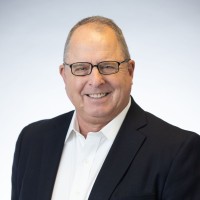
Across the United States, critical community infrastructure—from rural bridges and post offices to broadband networks and public schools—is aging faster than it’s being replaced. Many local governments, especially in smaller or rural communities, lack the funding, time, or in-house expertise to tackle large, complex projects on their own.
In this conversation, Bob Hellman of American Infrastructure Partners walks through how they see the problem on the ground, why traditional public funding often falls short, and how private capital can complement—not replace—government efforts. The discussion ranges from structurally deficient bridges and rural “left behind” communities to broadband deserts and outdated school facilities.
What emerges is a picture of a huge national challenge—and the argument that specialized private investors, working closely with local leaders, can be part of a pragmatic, long-term solution.
Q: When you think about community-based infrastructure needs in the U.S., where are we today?
A: One of the best sources for understanding this is the American Society of Civil Engineers. Every few years they publish an “infrastructure report card” that grades different categories—bridges, roads, schools, water, and so on—on a letter scale from A to F. A lot of those grades are lower than people might expect, unless you live in older cities or in the middle of the country where infrastructure hasn’t been updated in decades.
Infrastructure is fundamental to economic development. If you don’t have reliable power and water, or transportation routes that connect your community to the wider region, it’s simply hard to live, work, and do business. Good, well-maintained infrastructure directly improves quality of life.
On a personal level, when I travel overseas and say I’m from the U.S., people often respond with some version of, “Your infrastructure is terrible.” It’s embarrassing. My parents came from Russia, so there’s also a bit of a lens of: the government isn’t fully doing the job here, and someone has to step in and help solve problems that affect everyday people.
We’ve also been thinking a lot about “left-behind” communities—often rural areas that feel ignored by national policy and politics. Infrastructure is a big part of that. Schools, for example: the average U.S. school building was constructed in the 1950s. Many bridges were built with original design lives of 50 years and are now pushing 100. None of that happens overnight, but it’s catching up with us.
Q: What are the main constraints communities face when they’re trying to fund and deliver infrastructure projects?
A: There are two big issues: funding and execution. I wouldn’t call it a “conflict” between rural areas and cities, but there is a real imbalance.
If you’re a small-town mayor, you might build half a bridge in your entire career. That means you don’t have a deep bench of internal expertise around once-in-a-generation projects. You may not have staff who know how to navigate state and federal departments of transportation, write competitive grant applications, or manage a complex construction process from start to finish.
Larger cities, by contrast, tend to have better functioning bureaucracies and long-standing relationships with state and federal agencies. They can raise municipal debt more easily, they have more assets to pledge, and they know how to apply for and win grant funding. A small town might have one bridge that’s its only revenue-generating asset—if it even has a toll on it.
So the constraints are both:
- Execution: limited local capacity to plan, negotiate, and oversee big projects; and
- Funding: difficulty competing for grants or debt, plus limited tax bases.
Q: How does private capital fit into that picture? What exactly do you do?
A: The American Infrastructure Partners model is to identify investable community assets and bring private capital and execution expertise to bear. Right now, that includes bridges and postal facilities, and we’re also working on schools and rural broadband.
In simple terms, we raise money from private investors and deploy it into community infrastructure—typically large construction or modernization projects. For a bridge, for example, we finance, build, and own the asset for a period of time. We’re responsible for maintaining it, operating it, and collecting tolls if that’s part of the structure. After several years, once the asset is stabilized, we sell it.
We’ve built six bridges over the past decade, in what’s probably been the highest inflationary environment of the last 30–40 years. That’s about $600 million of civil construction and engineering. Across that entire portfolio, we’ve had about a $6 million cost overrun. So despite inflation and labor challenges, we’ve delivered those projects essentially on time and on budget.
Private entities have very clear incentives to do that. If we don’t deliver, we don’t get paid and we don’t get invited back.
Q: How do you compare private funding to grants and municipal debt from a community’s perspective?
A: We jokingly call grant money “free money.” That’s our internal, slightly pejorative term. It’s great when a community can get it, because it means they may not have to charge tolls or raise local taxes.
But grants have real drawbacks:
- Timing: they can take a long time to apply for, approve, and disburse.
- Partial funding: often they cover only 20–50% of total construction costs.
- No implementation help: money arrives, but no operational team comes with it to manage the project.
Municipal debt is the other traditional tool. That’s often run by a local finance director or CFO-type role. But muni finance can suffer from “hammer and nail” syndrome: if debt is the only tool you know, everything looks like a bond issue. For a single small project, a town may not get great rates because the debt is not diversified—it’s tied to one asset in one location.
Our capital is different. We own the asset outright for a period, we’re fully responsible for it, and we bring a diversified portfolio across multiple projects and regions. Communities don’t have to pursue a referendum to approve new debt. We’re one option among several, but we can often move more quickly and with more execution certainty.
Q: Are there particular characteristics that make a community a good candidate for private infrastructure investment?
A: The starting point is simple: there has to be a real problem to solve. We’re not trying to build a new bridge where a perfectly good one already exists.
Beyond that, two things matter a lot:
- Motivated leadership. These are big, consequential decisions. We need local leaders—mayors, county officials, commissioners—who are willing to engage, ask hard questions, and shepherd the project through the political process. We see ourselves as one option on their funding “menu,” and we try to help them understand what’s best for their community.
- Willingness to partner. Often, the communities that are the best fit either can’t afford to fund the project outright or would prefer to use their scarce dollars elsewhere. If they have ample tax revenue and debt capacity, they might not need us. But where there’s a gap, we can fill it.
Grant money can actually help expand the universe of projects that work for private capital. A 20% subsidy, for example, might be what makes the return on investment viable for a smaller community project that otherwise wouldn’t pencil out.
Q: What about labor and local resources—do those play a role?
A: Absolutely. On the construction side, we rely heavily on local labor and, very often, on unions. Of the six bridges we’ve built, five were built with union labor.
That matters for a few reasons:
- Jobs: many rural communities are struggling with blue-collar employment. Being a strong local employer during a project can be a significant benefit.
- Execution: unions provide organized, skilled labor. That allows us to negotiate fixed-price, fixed-duration contracts, which is crucial for being on time and on budget.
- Local know-how: every community has its own nuances—regulators, permitting processes, informal power structures. Local labor and union partners know who to talk to and how to get things done.
On the funding side, local governments may still use municipal debt where appropriate, but we’re careful about not assuming debt is the answer to every problem. Our diversified portfolio gives us flexibility that a single-project muni bond can’t match.
Q: How common is private ownership and tolling of infrastructure in the U.S. today?
A: It’s still very early days in the U.S. Privately owned and operated infrastructure is much more common in parts of Europe.
In America, tolling itself isn’t new—many toll roads and bridges exist, even when they’re publicly owned. But truly private ownership of core assets like bridges is still relatively rare and somewhat unfamiliar to many communities.
That unfamiliarity can create pushback. Nobody likes to pay for things, and if a community isn’t used to tolling, it can be politically sensitive. When nearby areas have tolls already, acceptance tends to be higher.
Despite that, we’ve shown that you can build major bridge projects in roughly three years end-to-end—from initial engagement to completion—while many publicly funded projects take a decade or more, with much higher price tags. That contrast gets people’s attention.
Q: You’ve mentioned structurally deficient bridges. How do communities typically realize it’s time to act?
A: There are a couple of technical thresholds that usually trigger serious action.
- Structurally deficient means the bridge’s condition has deteriorated to the point where safety is a real concern. People are driving across these structures every day, so when an inspection rating hits that threshold, it’s a wake-up call.
- Functionally obsolete means the bridge can’t handle the traffic volumes or vehicle weights it should. That’s when you start seeing posted weight limits—signs saying vehicles over a certain weight can’t cross.
Communities often see a pattern: repeated closures, temporary repairs, and bad inspection grades, all of which show up in local news. A good example is the Decatur Bridge in Burt County, Missouri. It’s over 70 years old, and there have been public discussions and open houses about its future because everyone knows they’re out of runway on patchwork fixes.
The overarching issue is that there are just so many bridges in similar condition across the country, and not nearly enough public funding to address them all quickly. That’s where we think private capital can help.
Q: Beyond bridges, you’re also working on rural broadband. What does that look like?
A: Our broadband initiative focuses on fixed wireless, sometimes called a WISP—a wireless internet service provider. We’re deploying this in a valley region in West Virginia, with the aim of reaching around 50,000 people.
The basic idea is to use wireless infrastructure—antennas, towers, rooftop equipment—instead of running fiber all the way to every home. In hilly, sparsely populated areas, fiber can cost hundreds of thousands of dollars per mile, even approaching a million. That’s just not practical in many cases.
Wireless lets us:
- Reach more homes at a much lower cost per household
- Move faster than a full fiber build
- Support critical use cases like remote work and telehealth
We build out what’s essentially a mesh network. Buildings don’t just receive a signal; they also help relay it onward. We work with schools, churches, nonprofits, and local businesses to extend coverage.
The problem we’re trying to solve is stark: during the pandemic, about 15 million students in the U.S. didn’t have access to high-speed internet. They were doing homework from McDonald’s parking lots or using makeshift Wi-Fi buses. Distance learning without connectivity is just “distance not learning.”
We’re still early in that venture, but if we can prove the model, we see a big opportunity to replicate it in other underserved regions.
Q: You also mentioned educational facilities. What’s the infrastructure problem in K-12 schools?
A: The core issue is a mismatch between operating funding and capital funding.
Schools receive fairly stable money for operations: teacher salaries, staff, and lease or rent payments on their buildings. Those budgets are politically sensitive—no one wants to be seen as “cutting school funding.”
But they don’t receive nearly enough dedicated money for capital expenditures—actually upgrading or replacing outdated facilities. That’s a different kind of spending, and it’s often not built into their regular budgets.
We step in by acquiring, upgrading, or expanding K-12 public school facilities—both traditional district schools and charters—and then serving as a long-term landlord. We invest in modernizing buildings so they’re fit for 21st-century teaching and learning.
There’s strong evidence that students perform better in modern, well-designed schools. It’s intuitive: think about how much more productive you feel in a bright, well-equipped office compared to a dilapidated strip-mall space. For kids, that effect is even more pronounced.
The capital gap here is enormous—on the order of tens of billions per year over the next decade. We’ve already worked with dozens of schools across many states and continue to see a deep pipeline of need.
Q: How do you think about your role as a long-term owner and operator of these assets?
A: We don’t see ourselves as just financial investors. We’re stewards of critical community assets.
For a bridge portfolio, for example, the relationship with a community can last a decade or more. We don’t build the asset and immediately flip it—we own and maintain it for years before selling. During that time, we’re on the hook for safety, maintenance, and customer experience.
If we cut corners and something goes wrong, we’re done. No community is ever going to trust us with another bridge—or a school or a broadband network. So the incentives are very strong for us to be responsible, conservative, and transparent.
Trust is everything. Communities want to know: Who will own this bridge? Can we rely on them? Have they done it before without incidents? Building that trust takes time, repetition, and a track record.
Q: You’ve also mentioned post offices. What’s happening in that part of the infrastructure world?
A: Post offices are a bit of a sleeper story in American infrastructure. About two-thirds of U.S. post offices are privately owned buildings that are leased to the USPS.
There’s a significant “succession problem” there. Many of these buildings are owned by individuals who are now in their late seventies or older, and they often don’t have a clear plan for who will own and manage the property next.
We partner with USPS by acquiring those facilities and becoming a professional landlord. We now own a substantial portfolio of post office buildings across the country. It’s a quiet but important part of keeping essential services running in thousands of communities, especially rural ones where the post office is a lifeline.
Q: When you look across bridges, broadband, schools, and post offices, what do you think communities should be looking for in a private infrastructure partner?
A: A few things stand out:
- Track record: Have they actually delivered similar projects before—on time, on budget, and safely?
- Local engagement: Are they willing to show up in the community, attend public meetings, and answer questions honestly?
- Long-term commitment: Do they plan to own and maintain the asset for a meaningful period, not just build and disappear?
- Flexibility: Can they work alongside grants, local contractors, unions, and existing public processes, instead of trying to bulldoze through them?
In many cases, communities won’t have multiple private bidders to compare—we’re still early in this market. So those qualitative factors matter a lot.
Growing Communities With American Infrastructure Partners
America’s infrastructure challenges are massive, especially in rural and “left-behind” communities where aging bridges, outdated schools, spotty broadband, and fragile postal facilities can quietly erode quality of life and economic opportunity. Public funding—whether through grants or municipal debt—remains essential, but it’s often too slow, too limited, or too thinly stretched to cover the full scope of the problem.
Private investors can’t and shouldn’t replace the public sector. But by bringing specialized expertise, disciplined execution, and long-term stewardship to specific projects, they can help communities close critical gaps faster and more reliably. Whether it’s rebuilding a century-old bridge, lighting up a broadband desert, or modernizing a mid-century school, the emerging partnership between local governments and mission-driven private capital may prove to be one of the most practical tools for renewing America’s built environment in the decades ahead.