Q&A with Nicholas Mukhtar, Founder of Tera Strategies, LLC
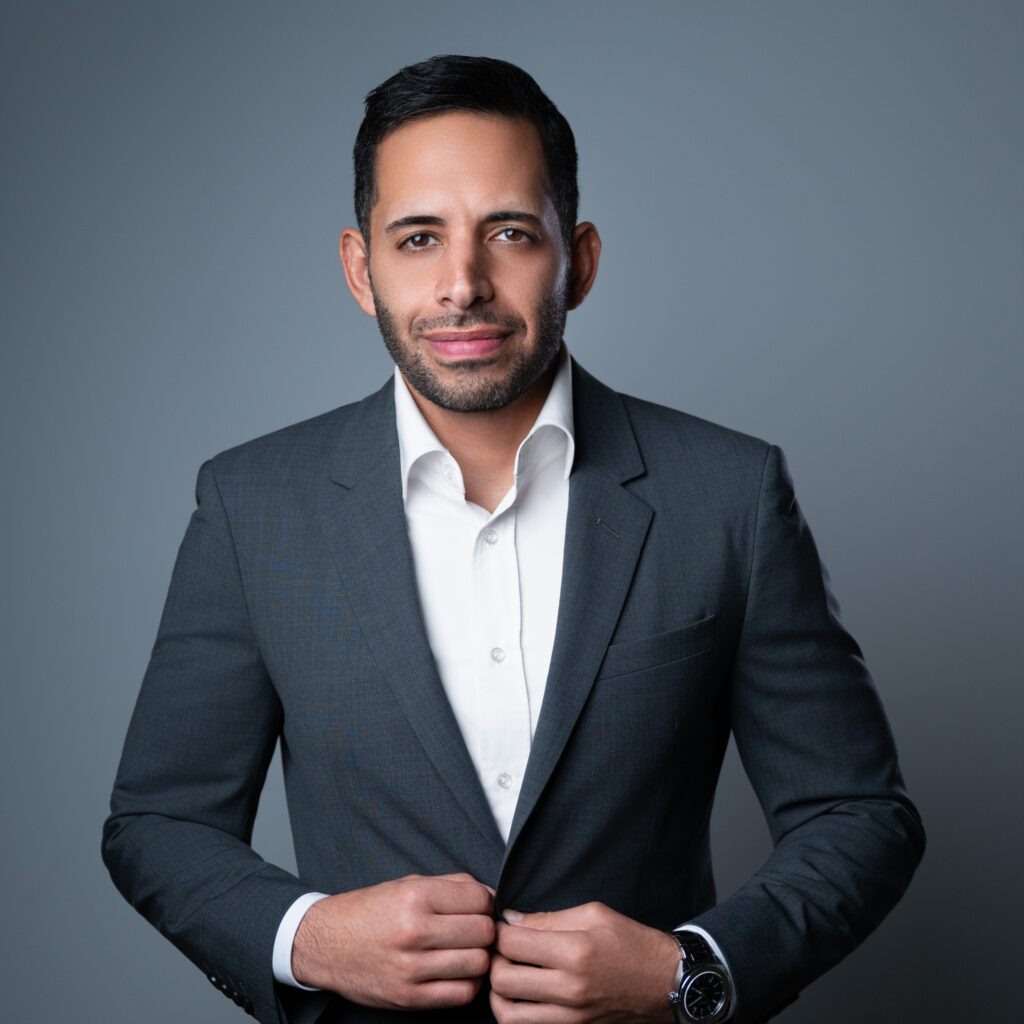
Nicholas Mukhtar is a business management consultant and former nonprofit executive whose work has spanned public health, government policy, and private sector advisory services. Born and raised in Detroit, Michigan, Mukhtar developed an interest in community health early in his education. He began his undergraduate studies at the University of Dayton, where he received a Chaminade Scholarship, before transferring to Wayne State University and completing his bachelor’s degree in 2013. While finishing a medical program, he studied the Affordable Care Act and its emphasis on prevention. According to a 2018 Parks & Recreation Magazine profile, this study led him to “create systems change at the community level and focus on prevention” rather than pursue clinical medicine.
Mukhtar founded Healthy Detroit in 2013, one year after completing his undergraduate degree. The 501(c)(3) nonprofit drew inspiration from the U.S. Surgeon General’s National Prevention Strategy, using city parks as accessible hubs for health services. The organization’s HealthPark initiative, launched in July 2014, transformed several Detroit parks into one-stop wellness centers. These sites offered free fitness classes, health screenings, immunizations, and nutritional programs to residents of all ages.
Under Mukhtar’s leadership as CEO, Healthy Detroit grew substantially. He mobilized over $100 million in funding and built the nonprofit to an annual operating budget of approximately $15 million by 2017. The American Public Health Association recognized Healthy Detroit as the National Public Health Organization of the Year in 2017, citing its work in advancing health equity in underserved communities. The organization’s approach also appeared in the U.S. Surgeon General’s 2014 report to Congress. Mukhtar received the Playmakers Changemaker of the Year award in 2015 for his work in community health.
Mukhtar pursued graduate education while leading Healthy Detroit, earning dual master’s degrees in Public Policy and Public Health from Johns Hopkins University in 2017. He was selected as a Bloomberg Fellow at the Bloomberg School of Public Health, a distinction recognizing his commitment to public health education and policy. His public engagements during this period included speaking at a Washington Post Live forum on community health, addressing the Detroit Mayor’s Health Summit at Wayne State University, co-hosting an event with U.S. Senator Rand Paul focused on economic empowerment and healthcare, hosting an engagement with investor Kevin O’Leary on entrepreneurship, and introducing U.S. Surgeon General Vivek Murthy at a Detroit event.
Throughout his career, Mukhtar has held positions on several boards and committees. Mayor Mike Duggan appointed him co-chair (later chair) of the Detroit Parks & Recreation Commission. He has served on the board of the MIU Men’s Health Foundation since 2014, the Michigan Recreation & Park Association since 2016, and the Chandler Park Conservancy since 2016. He joined the steering committee of the Michigan Community Health Worker Alliance in 2017 and was appointed to the board of St. Mary Mercy Livonia Hospital in the Trinity Health System in 2018. He also serves on the external advisory board for Wayne State University’s Master of Public Health program.
After nearly five years leading Healthy Detroit, Mukhtar transitioned into consulting. He founded Healthy Communities, LLC in Washington, D.C., a boutique consulting firm focused on public policy and health. Through this firm, he advised policymakers including Speaker of the House Paul Ryan and contributed to the White House Office of American Innovation. He also established The Mukhtar Group, LLC, offering business management consulting services to private sector clients. Mukhtar currently operates Tera Strategies from Fort Lauderdale, Florida, where he serves as founder and senior business management consultant. His work focuses on partnering with CEOs, medical directors, investors, and business owners on digital transformation and organizational development. He is fluent in English, Arabic, and Spanish.
Q: You built Healthy Detroit from the ground up, securing over $100 million in funding and achieving a $15 million annual budget. What made you decide to transition from leading that organization into business consulting?
Nicholas Mukhtar: After I started my nonprofit, it got a lot of national press and attention. The rationale was that if we could get this done in Detroit, we could probably do it in a lot of other cities across the country. At that time, I started getting more involved nationally, specifically in Washington, D.C. That was initially the pivot to more of a consulting role — working with other cities and government agencies on what I had built in Detroit.
After a couple of years of doing that and spending time in D.C., I looked around and saw a lot of my mentors and peers who had spent 40, 50 years working in healthcare reform and, quite honestly, hadn’t gotten anything done. That was a scary thought — that I could be devoting 50 years of my life to something I believe in and am passionate about, but not see real outcomes.
It was a combination of that and the Washington burnout. It was around 2016, 2017. Trump had just gotten elected. I had been working in healthcare reform with the Clintons at the time. They were planning on winning the presidency, so it was a really strange time all around. I’m someone who has been very apolitical and bipartisan. I don’t think healthcare should have a political party. We all want to live in a country where we can be healthy, happy, and live prosperous lives.
Long story short, I got burnt out. I started thinking maybe Washington wasn’t the place for me. That’s where I began transitioning into the private sector — trying to find other ways to be passionate, make money, and live a good life.
Q: Your Johns Hopkins training and Bloomberg Fellowship obviously shaped your public health work. How does systems-level thinking from epidemiology and public health actually translate to diagnosing business problems?
Nicholas Mukhtar: One of the things I took away from working with the Bloomberg team, and eventually Mayor Bloomberg, was what they had done in New York City to turn the city around. They created a public-private partnership with the health department. They realized that government funding and big bureaucratic institutions just aren’t equipped for innovation. So they formed a nonprofit arm that was completely separate and independent of the government but had a real public-private partnership agreement. That led to places like Bryant Park being rejuvenated — just all-new life and an innovative way of thinking that doesn’t exist in government.
I think it’s the same thing in business. I look at companies in two buckets. One is these large, established companies that function much like big city governments — bureaucratic machines that sometimes can’t get out of their own way. The other bucket is the startup, which is much like the nonprofit I started: a group of people doing 20 different roles, trying to turn it into a real functioning business.
For large companies, you do have to think outside the box. A lot of times it takes outside thinking. I know there’s a lot of comedy about companies using the McKinseys of the world, but the rationale is sound — an outside voice that isn’t ingrained in the day-to-day can actually be creative and think differently.
From a startup perspective, it’s a bit of both buckets. You want to look at larger institutions to see what they’ve built and how they got there, but also where they messed up. Every entity and every person is unique, and you have to treat it as such. There’s no one-size-fits-all solution to any problem.
Q: You’ve worked with many business owners, and there’s often a gap between their stated problem and the actual root cause. What pattern do you see most often? And what’s one question you wish every potential client would ask themselves before reaching out for help?
Nicholas Mukhtar: This is an easy answer, and I see it constantly: communication. Even in the office I’m sitting in right now, which is with a client — the number of times I’ll have two different employees come talk to me about a problem, and it’s like, well, did you just sit down and talk about it? Did you tell her what was bothering you? Did you actually put a plan in place?
Communication is key on any team. I played sports growing up. My dad’s a legendary high school soccer coach in Michigan. Communication is the theme in sports, in business, in life, in partnerships, in marriages and families. And in some ways it’s gotten easier — like what we’re doing right now on a video call — but in a lot of ways, especially for the younger generation, it’s gotten more challenging because they don’t have those face-to-face interactions we used to have. Social media, cell phones, texting, screens in general — it’s made people a little more reserved in how they communicate.
I kid you not, that seems to be 90% of the problems across the board. People just need to talk.
People get pulled in so many directions. A lot of it is that you just need to simplify things and have a conversation: Why isn’t this working? What are the things that are bothering you? How do we make it better? I’ll have clients with employees who are threatening to leave, and I ask: Did you, as the employee, sit down with the business owner and explain why you want something different? Give them the opportunity to meet you there? Most of the time the answer is no — they just assumed they wouldn’t be able to get that, so they felt they had to look elsewhere.
It can be really that simple. Just say, “I’m X years old. This is where I’d like to be in five years. Do you have a plan for me to get there?” Let the business owner or CEO come back and tell you what they have in store.
Q: You mentioned your father. What did growing up with a legendary soccer coach teach you about business?
Nicholas Mukhtar: He taught me the art of relationships. The most important part of building relationships is showing genuineness. I remember giving my first presentation to a block club in Detroit. Detroit was a very racially divided place. While I am brown, I’m not Black. Going into communities I wasn’t from and having to pitch them on an idea — when they’ve been promised things before, when they’ve had people come in suits and lie to them — my dad’s advice to me, literally on the way to that presentation, was: They will sense if you’re genuine. If you give it to them straight, if you tell them what’s on your heart, speak from your heart and don’t speak from notes, they will believe you and they will trust you.
He’s brilliant at that. I run into people every day, all over, who say, “Are you Coach Mukhtar’s son? I had him as a teacher or a soccer coach, and the life lessons he taught me — I wouldn’t be the CEO of this company if it wasn’t for your dad.” He still maintains those relationships, and they’re not fake. They’re real. He truly cares about all those players and former students.
I try to do that as well. You’re never going to get any fakeness from me. I wear my heart on my sleeve, and that’s something I got from him. If people know you care about them, you can do a lot. Don’t take this the wrong way, but you can get away with a lot. People who know you have their back and their best interest — they will take you at your word.
Q: You work extensively with family offices on governance, succession, and long-term planning. What’s the biggest governance mistake you see family offices make repeatedly? And what do the ones who get it right have in common?
Nicholas Mukhtar: The biggest mistake is not getting their kids involved early enough. You don’t know what life has in store. Sometimes it’s clients of clients, but you’ll see situations where someone passes away or there’s an accident, and the children truly have no idea what their parents built, how they built it, how things are set up, or what to do.
On the other side, I’ve seen clients who do a great job. They set their kids up with a small account at 10 or 11 years old, have them pick stocks, teach them the value of time in the market, saving money, creating buckets — “Say I have a lemonade stand: put 30% here, put 30% here, put 30% here.” Just looking at things differently.
The ones who make mistakes are often so busy building their business — doing what obviously led to their success and wealth — that they forget why they’re doing it: for their family and the next generation. Getting your kids involved, getting your spouse involved, having a true partnership — that’s the key. I see a lot of couples where one person handles everything on one side and the other handles everything on the other, and neither knows what the other is doing.
When you’re a high-level, high-performing individual, the overstimulation is on a whole other level. They’re getting invited to an event every night, going to this charity event or that. It’s very hard to slow down and actually do some family planning with the people who matter. The ones who do it well keep their kids and their partner very involved. The ones who struggle don’t.
Q: Your dual master’s degrees in public policy and public health from Hopkins give you a unique lens for working with medical directors. What’s the core tension medical directors face when trying to bridge clinical excellence with business performance?
Nicholas Mukhtar: We are in a very overly regulated, overly complex healthcare market. The family doctor who ran his own practice with a young lady at the front desk and a couple of nurses — that model doesn’t really exist anymore. It doesn’t exist because of how difficult it is to work with insurance companies, how difficult it is to work with government agencies. And it’s not just healthcare; a lot of industries are like this. The overregulation has gotten in the way of people being able to run businesses and, more importantly, treat people. That’s what people want to be doctors for. That’s what people want to be nurses and PAs and nurse practitioners for. They want to help people and serve people. And it feels like they’re constantly being bombarded with paperwork and regulatory requirements.
I see the same thing in the wealth management industry. You have people who genuinely want to help their clients. They’re not stealing from anyone, not misleading anyone, but they’re constantly dealing with headaches from the SEC and FINRA.
To be fair, there are good reasons why we need regulatory bodies, and they serve an important function. I’m not anti-regulation, but I am pro-simplification. The more complex we make these systems, the people at the bottom are the ones who get hurt the most. That’s not what any of us got into this field for.
Q: You’ve observed that leadership expectations are shifting — less flash, more substance. What’s driving that shift?
Nicholas Mukhtar: I’d push back on the question a bit, because I still think you see very different types of leaders. There’s not one-size-fits-all. If I talk to 10 CEOs, they all have a very different style, a different way of looking at things. A Jamie Dimon approaches things very differently than the Google CEO. You really do have to take it case by case.
I’ve worked with business owners who are adamant that everyone in the office wears a suit and tie, and others who think that’s silly. They each have reasons for why they feel the way they feel.
I’m trying to think of consistent themes that have driven a shift. I don’t know that it’s as much of a shift as it is just that everyone is different. That said, social media has changed a lot. The presence of cameras has changed how people go about their day-to-day lives. That’s probably very different from how it was 20 years ago.
Q: Executive burnout has become a major conversation in business circles. From your consulting work, what are you actually observing?
Nicholas Mukhtar: It’s a twofold thing. I’m seeing a generation of leaders getting very burnt out, and a generation of new employees or young people entering the workforce who are — and I say this boldly — contributing in a lot of ways to that burnout.
There’s a divide between generations. You have a generation that was always first one at the office, last one to leave. That’s how they came up — work, work, work, work, work. And then you have a generation that doesn’t feel the same way. Some of it is entitlement; some of it is just kids being kids. If you went back 50 years, they’d probably say the same thing about the younger generation.
But I’m seeing constant frustration. I’ll be sitting in an office and the CEO is there at six or seven still working, and the 22- and 23-year-olds are out by 4:30 or 5:00. To get to where the CEO is, you have to be willing to do those things. But the younger employees want the CEO role and the CEO money without understanding what the CEO actually did to get there. It’s not all rainbows and butterflies. You might see him drive a Ferrari now, but that took years of grinding, in some cases six days a week.
It’s not that there isn’t a willingness to work — I think they just want to work differently. And it’s not to say they’re wrong, because I don’t know. But I’m seeing a divide. The older generation at the higher end of their careers, thinking about retirement, feel frustrated because they don’t feel comfortable handing things to the next generation when they don’t sense the same passion and work ethic. That’s a constant complaint I hear across the board — engineering, wealth management, healthcare. Loyalty isn’t as common as it once was.
Q: What are you most excited about over the next few years, professionally or personally?
Nicholas Mukhtar: Personally, I got married this past year and we bought a home here in South Florida. My wife is born and raised in Fort Lauderdale. She’s from a Puerto Rican and Cuban family, and I’m from a Catholic Middle Eastern family. So we have big cultural similarities and differences, which are fun. Our goal is to focus on our family and build our family.
Professionally, I’d like to take on a very impactful project where I can see tangible outcomes on causes I’m passionate about — specifically healthcare and healthcare reform. I spent several years working on Medicaid reform, and that’s something I would love to be involved in again. I think there’s a lot of opportunity to use Medicaid to really help people and get them to a place where they’re healthy and contributing members of society. I don’t think that’s how our Medicaid system is being used today.
I’d also love to grow my business to a point where I can be more selective in the types of projects I work on and the clients I work with. But I think that’s every consultant’s goal. I like helping people. I like taking on projects where I can see outcomes. I’m an outcomes-driven person. I don’t like working on things where you won’t see results for a hundred years.
That was a big benefit of Healthy Detroit. I’d see kids playing basketball with a deflated ball and two construction barrels. That was my initial inspiration — I was driving around the city around 2010, 2011, and I saw these kids in a major American city who didn’t even have a place to play. They didn’t choose to be born in that zip code. They didn’t even have a park. I had 10 parks to choose from, a gym, my own high school. So I started reaching out to corporations and saying, “We can build them a basketball court for three grand. Let’s do this.” And we were able to see those changes almost overnight. Even now, I take my wife back and show her — there are kids playing in that park. That was an abandoned lot we helped fix up. That’s my passion. That’s what drives me.
Q: You speak English and Arabic and you’re working on Spanish. How does your cultural fluency show up in your consulting work?
Nicholas Mukhtar: It does and it doesn’t. In a lot of ways, I purposely try to keep it separate because of how political the world has gotten. That said, it has helped me. I worked in D.C. for a couple of years with the White House Office of American Innovation. I played a role in Middle Eastern peace talks, and being able to speak the language, being brown, working alongside someone I considered a brother who was Jewish — things like that helped. Both of us being in the same room and understanding both sides of the culture was valuable.
At the same time, I’m not Muslim, and that played a role. A lot of the Arab or Middle Eastern community views me as an outsider because we’re a Christian minority group from Northern Iraq — a unique minority group in its own little bubble.
When I moved to South Florida, there’s obviously a huge Latino influence. I married a Latina, so I’m learning Spanish. I have so much respect for different cultures. I love learning languages. My friends make fun of me, but my Apple Music has French music, Arabic music, Spanish music. I just love it.
One thing I’ll add is that my grandfather, my dad, and my mom were all born in Northern Iraq. They fled persecution and came to the United States. My grandfather would always tell us: In our home, we’ll speak Arabic, we’ll eat our Arabic food, we’ll respect our culture, and you’ll always be an Iraqi American. But when you leave the house, you’re an American. I want you to learn English, respect the culture here, and learn about other cultures. That’s how my family was raised. We have tremendous respect for our heritage, but we’re also very proud to be American. My grandfather wore an American flag lapel pin until the day he died.
Q: Is there anything we didn’t cover that you’d like to mention?
Nicholas Mukhtar: My passion for Healthy Detroit is really important to me. I think that story speaks to how I was raised and how I view things. I was on a path to becoming a medical student and a doctor. Being in Detroit at a very unique time in the city’s history and seeing some of the things I described — it opened my eyes. I’m the type of person who sees a problem and wants to fix it. That applies to the world, to business, to companies, to my family.
I think I’m good at figuring things out, good at communicating, problem-solving, being logical, being level-headed. A lot of times that’s half the battle. Even politically in the United States, you have 5% on the fringe of either side creating this huge divide. Most people are in the middle and just want a good life for themselves and their families.
It goes back to the communication point. You just have to sit down and talk, because you realize people aren’t that different. They don’t want that much different. At the end of the day, we’re all humans who want to live in a peaceful world and take care of each other. It’s not much different in business.